Shisha Charcoal Production Process Overview Complete Guide
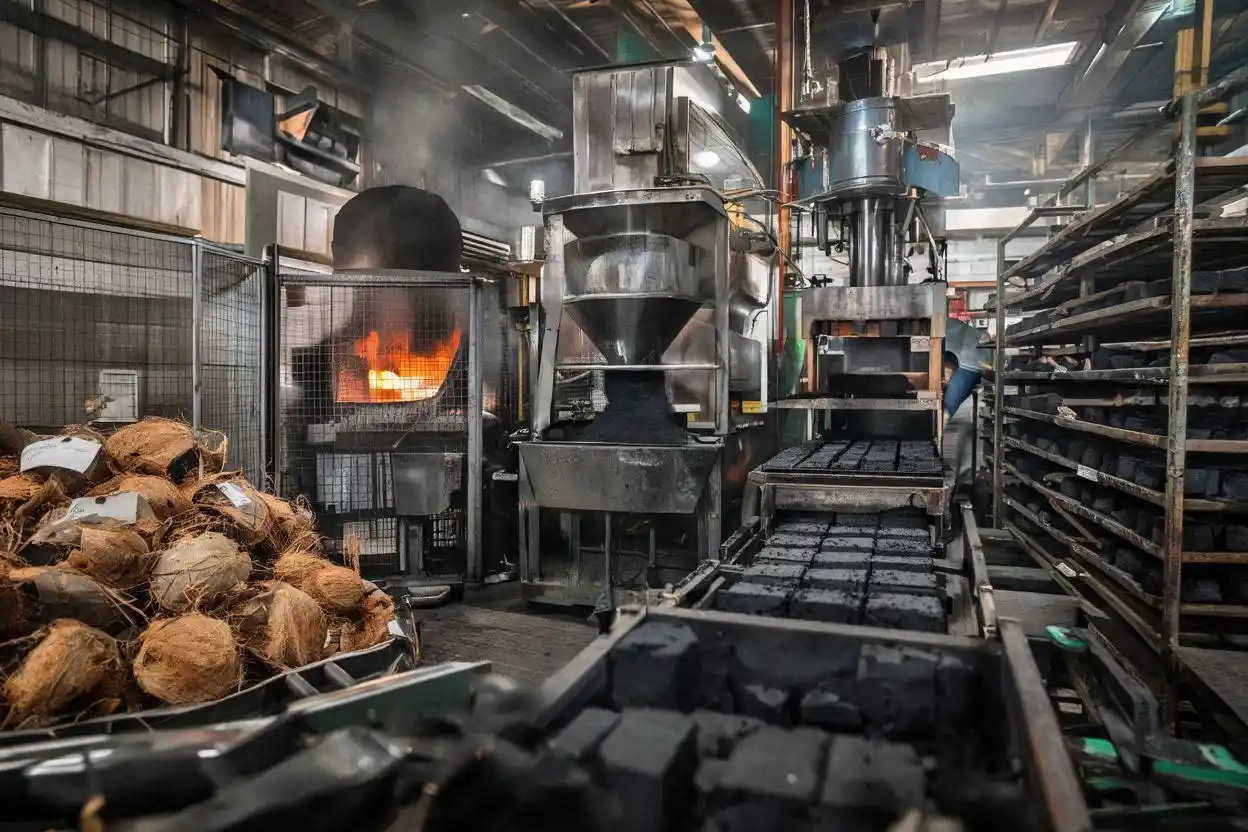
Understanding shisha charcoal production process overview helps readers and business owners see how quality charcoal reaches the market. The production process directly affects burn time, heat stability, and cleanliness. Therefore, manufacturers must control every stage carefully to achieve consistent results.
Shisha Charcoal Raw Materials Process
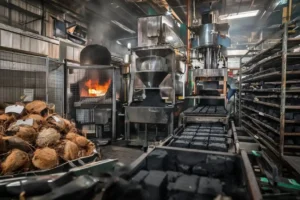
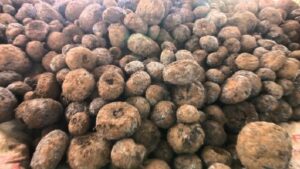
Producers start the process by selecting high-quality raw materials. Most manufacturers choose coconut shells because they offer strong density and long burn duration.
They sort and clean the raw materials to remove dirt and impurities. This step ensures better carbonization results and improves overall product quality.
As a result, careful selection creates a strong foundation for premium charcoal production. Producers also check moisture levels to maintain stable processing conditions.
Shisha Charcoal Carbonization Process
Next, producers convert raw materials into charcoal through carbonization. They heat coconut shells in a controlled environment with limited oxygen.
This process removes moisture and volatile compounds while increasing carbon content. Producers monitor temperature closely to maintain consistent results.
Because of this, proper carbonization determines the strength and performance of the final product. Stable control prevents uneven burning quality.
Shisha Charcoal Grinding and Mixing Process
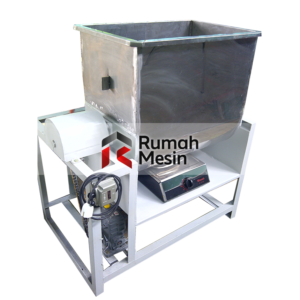
After carbonization, producers crush the charcoal into fine powder. They use industrial machines to achieve uniform particle size.
Then, they mix the powder with a natural binder, usually starch. This mixture allows producers to shape charcoal without affecting burn quality.
Consistency during mixing ensures stable structure and reliable performance. Uniform blending also improves product density and enhances durability during use.
Shisha Charcoal Shaping and Pressing Process
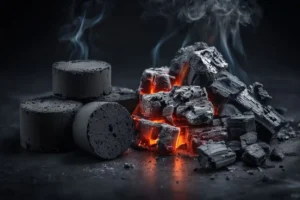
Producers shape the mixture into cubes, flats, or hexagonal forms. They use high-pressure machines to create dense and uniform shapes.
This stage improves durability and ensures even burning. Strong compression helps charcoal maintain shape during transport and use.
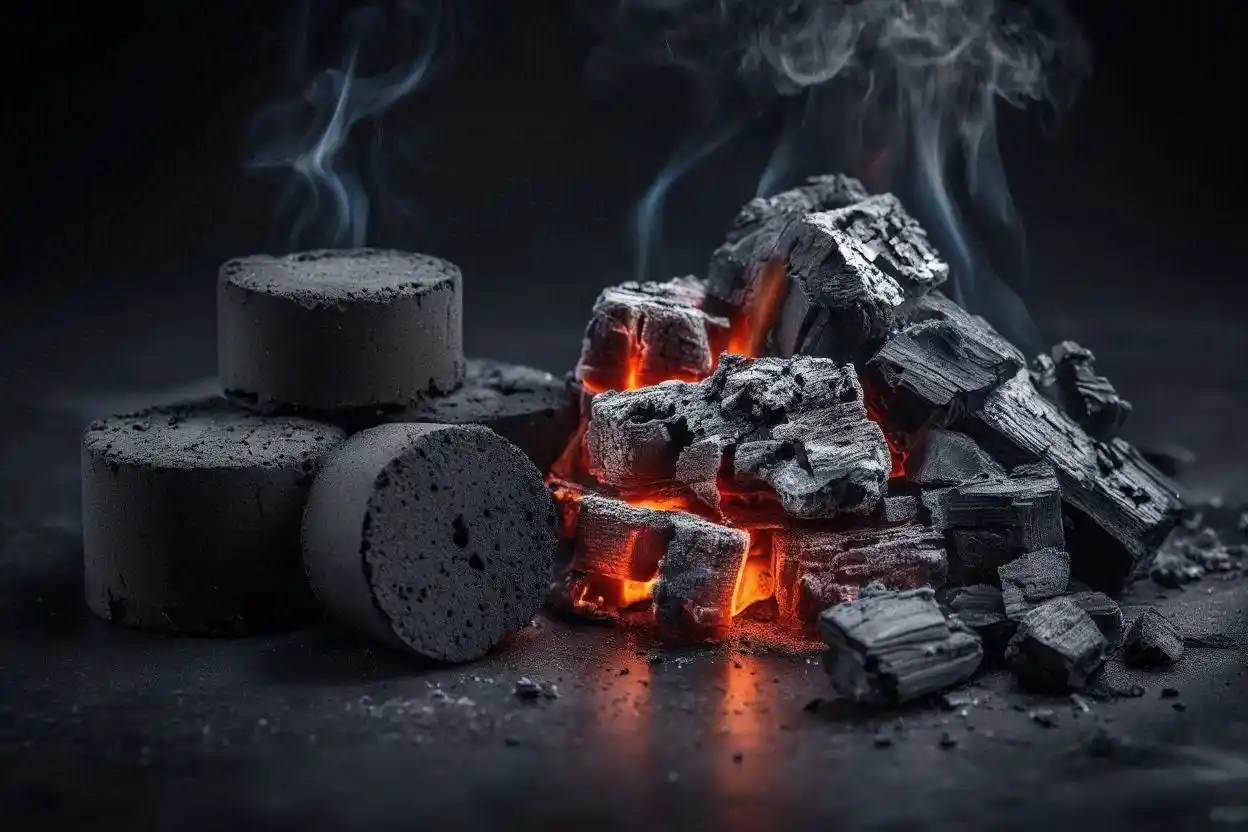
Many businesses prefer Shisha charcoal in cube form because it offers balanced heat distribution.
Shisha Charcoal Drying and Quality Process
After shaping, producers dry the charcoal to remove remaining moisture. They use controlled drying systems to avoid cracks or deformation.
Then, quality control teams inspect each batch. They check:
- Moisture content
- Ash level
- Burning duration
- Structural integrity
This process ensures consistent quality and stable performance. Continuous inspection also maintains production standards and reduces product defects.
Shisha Charcoal Packaging and Distribution Process
Finally, producers package the charcoal for distribution. They use protective materials to prevent damage during shipping.
They also label products clearly to provide usage instructions and specifications. Proper packaging maintains product quality until it reaches users.
To explore more insights and production knowledge, you can visit indobriquettescharcoal as a trusted reference.
Benefits of Efficient Production Process
Efficient production improves both product quality and business performance. Manufacturers who control each stage can deliver consistent results.
In addition, efficient processes reduce waste and optimize resource usage. This approach increases profitability while maintaining high standards.
Moreover, consistent production builds trust among distributors and customers. It also strengthens long-term supply relationships and supports business scalability.
Conclusion
In conclusion, understanding shisha charcoal production process overview provides valuable insight into how manufacturers create high-quality charcoal. Each stage plays a critical role in determining performance and durability.
By controlling every step carefully, producers ensure stable heat, long burn time, and clean combustion. This structured approach supports reliable products and sustainable business growth.




Post Comment